If you’ve ever wondered why certain trap beats hit harder with mechanical, industrial textures or why some rappers are experimenting with four-on-the-floor kicks, the answer often traces back to one genre: techno. This guide breaks down the history, sound, and production techniques behind this influential electronic dance music style—and shows you how to bring those elements into your own music.
What is Techno? (Quick Answer for Artists)
Techno music is a primarily instrumental form of electronic dance music built around a repetitive 4/4 kick pattern, typically running between 125–140 BPM. Unlike hip-hop or trap, which center on vocals, hooks, and melodic structure, techno prioritizes hypnotic rhythm, evolving textures, and long-form arrangements designed for extended DJ sets in club and rave environments.
The core difference between techno and house music comes down to feel. House leans warmer, soulful, and groove-driven. The techno sound runs darker, more mechanical, and often industrial or futuristic in tone. Compared to trap, techno strips away the 808 rolls and hi-hat triplets in favor of straight sixteenth-note patterns and relentless momentum.
At NoiseEra, we specialize in techno, house, trance, DnB, dubstep and hard dance. But understanding techno helps artists who want to cross over into electronic-influenced rap, experiment with darker textures, or simply expand their production vocabulary.
To anchor this in real music: think about Jeff Mills spinning relentless sets at Berlin’s Tresor club in the early 1990s, or Adam Beyer’s Drumcode releases from the late 2010s that defined modern peak-time techno. These tracks aren’t about verses and choruses—they’re about creating a sonic environment that evolves over six, eight, or twelve minutes.
Origins of Techno: Detroit, Germany & Early Experiments
Techno didn’t emerge from nothing. It came from a collision of African American musical traditions, European electronic experiments, and the specific economic and cultural conditions of late-1970s and early-1980s Detroit and beyond.
Precursors and Early Influences
Before anyone called it techno, several artists laid the groundwork:
- Giorgio Moroder produced Donna Summer’s “I Feel Love” in 1977, introducing sequenced synthesizers and a pulsing, machine-driven groove that influenced countless producers
- Kraftwerk released “Computerwelt” (Computer World) in 1981, popularizing cold, robotic textures and futuristic themes
- Yellow Magic Orchestra from Japan brought their own machine-like grooves to international audiences
The word “techno” itself appeared in various contexts before Detroit claimed it. UK acts like Techno Twins used the term in the early 1980s, and Japanese electronic music contexts featured similar terminology. But it was Alvin Toffler’s book Future Shock and its concept of “techno rebels” that inspired the Detroit scene to adopt the name with intention.
The Belleville Three
The real genesis of detroit techno centers on three high school friends from Belleville, Michigan, a suburb of Detroit:
Artist | Key Label | Notable Early Work |
|---|---|---|
Juan Atkins | Metroplex | “No UFOs” (1985), Cybotron’s “Clear” (1983) |
Derrick May | Transmat | “Strings of Life” (1987) |
Kevin Saunderson | KMS | Inner City’s “Good Life” (1988) |
These producers—often called the Belleville Three—began experimenting around 1981–1985, drawing from electro, synth-pop, and Chicago house while rejecting the Motown sound that dominated Detroit’s musical identity.
Codifying the Genre
The 1988 UK compilation “Techno! The New Dance Sound of Detroit” marked the moment when the term became codified in European record shops and music press. This release separated the detroit sound from Chicago house in the minds of UK buyers and DJs.
Parallel German Experiments
Meanwhile, Germany developed its own proto-techno scenes:
- The Frankfurt tape scene featured producers like Tobias Freund, Uwe Schmidt, Lars Müller, and Martin Schopf fusing experimental electronic music with EBM and synth-pop
- West Berlin’s Ufo club (1988–1990) hosted illegal acid and techno parties in industrial spaces
Chicago also fed into this ecosystem. Frankie Knuckles at The Warehouse pioneered chicago house in the mid-1980s, and that sound—along with New York electro and freestyle—directly influenced Detroit’s early aesthetics.
Detroit Techno & The New Dance Sound
Detroit’s industrial decline and African American musical heritage created unique conditions for a futuristic electronic sound. The city’s abandoned factories, economic struggles, and rich musical life converged into something that sounded like the future.
Juan Atkins: The Blueprint
Juan Atkins is often credited as the pioneer of the genre. His work with Cybotron produced essential proto-techno tracks:
- “Alleys of Your Mind” (1981) – one of the earliest records to blend electro with futuristic themes
- “Clear” (1983) – later sampled by Missy Elliott in “Lose Control” (2005)
- “No UFOs” (1985) – released under Model 500, widely considered one of the first true techno tracks
Atkins founded Metroplex Records, which became a template for artist-owned techno labels.
Derrick May: Emotional Machine Music
Derrick May’s Transmat label released some of the most emotionally resonant early techno. His track “Strings of Life” (1987), released under the name Rhythim Is Rhythim, blended orchestral samples with drum machine precision. When this record hit European dance floors, it incited pandemonium—proving that electronic music could carry deep emotional weight.
Kevin Saunderson: Pop Crossover
Kevin Saunderson’s Inner City project demonstrated techno’s commercial potential. Tracks like “Big Fun” and “Good Life” (both 1988) crossed over into UK charts, introducing the detroit scene to mainstream audiences who might never have encountered Underground Resistance or Metroplex.
Key Venues and Collectives
The detroit scene consolidated around specific spaces:
- The Music Institute (1988–1989) – a club where DJs like Derrick May, D-Wynn, and Alton Miller refined the continuous, mix-focused style that defined techno DJ sets
- Underground Resistance (founded ~1989) – a collective led by Jeff Mills and Mike Banks that added militant, Afro-futurist themes to the music
Underground Resistance maintained a hardcore, political ethos even as rave culture commercialized the sound in Europe. Their approach emphasized anti-commercial principles and Black futurism.
Germany, Raves & The European Techno Explosion
Between 1987 and 1994, techno migrated from Detroit imports to massive European rave culture. The genre transformed, fragmented, and exploded across the continent.
Frankfurt’s Evolution
The Frankfurt tape scene transitioned from experimental EBM and industrial sounds toward club-ready techno by the mid-1980s. Projects like Bigod 20 bridged electronic body music with dance floor functionality. Labels linked to this scene influenced what would become trance through producers like Sven Väth, who operated at venues like Omen and Dorian Gray.
Berlin’s Raw Edge
Acid house penetrated West Germany through clubs like:
- Ufo in West Berlin (1988–1990) – illegal parties in industrial spaces
- Negerhalle and ETA-Halle in Munich – hosting acid and techno events
The first Love Parade took place on July 1, 1989, in West Berlin. Initially a small political demonstration of about 150 people, it eventually grew into an enormous street festival drawing hundreds of thousands by the mid-1990s.
Post-Wall Transformation
After the Berlin Wall fell in November 1989, empty buildings in the former East became legendary clubs:
Club | Opened | Significance |
|---|---|---|
Tresor | March 1991 | Located in a former vault, central to harder Berlin techno sound |
Planet | Early 1990s | Another key venue for the emerging scene |
DJ Tanith noted a “hardcore” progression in Berlin, moving from hippie and punk scenes into a hardcore house sound influenced by Dutch gabber, Belgian hardcore, and American producers like those on Plus 8 Records (Richie Hawtin’s label).
Frankfurt vs. Berlin
The two cities developed distinct approaches:
- Berlin: Raw, acid-driven techno with hardcore and gabber influences, inspired by 1980s EBM acts like DAF, Front 242, and Nitzer Ebb
- Frankfurt: Sleeker club focus, EBM-influenced, eventually pushing toward trance under DJs like Sven Väth
By 1993–1994, “Tekkno” compilations had pushed the genre into German mainstream media, even as underground scenes maintained purist approaches.
Tekkno vs. Techno & Global Commercial Exposure
Terminology mattered in early 1990s Germany. The spelling and framing of the genre reflected deeper tensions about authenticity, commercialism, and sound.
The “Tekkno” Distinction
“Tekkno” appeared on early-1990s German compilations and flyers to mark harder, rave-oriented sounds distinct from:
- Detroit’s soulful minimalism
- EBM’s industrial roots
- The “intelligent techno” that producers like Robert Hood championed
This created friction between scenes. Berlin’s acid-inspired techno house leaned toward hardcore, while Frankfurt maintained a more polished, melodic club sound that eventually evolved into trance.
Mainstream Crossovers
Several moments brought techno textures to wider audiences:
- Underworld’s “Born Slippy .NUXX” (1995) became a global hit through the Trainspotting soundtrack
- Orbital’s Glastonbury performances in the early/mid-1990s legitimized electronic music in rock festival contexts
- Missy Elliott’s “Lose Control” (2005) sampled Cybotron’s “Clear,” earning Juan Atkins wider credit and a Grammy nomination
Brands and advertisers also normalized the sound. Automakers used industrial Detroit-style tracks in 1990s–2000s commercials, and tech companies adopted electronic textures in their sonic branding.
Modern Global Infrastructure
Today, techno maintains a global club infrastructure:
Venue | City | Opened |
|---|---|---|
Berghain | Berlin | 2004 |
Bassiani | Tbilisi, Georgia | 2014 |
Fabric | London | 1999 |
Sub Club | Glasgow | 1987 |
Egg London | London | 2003 |
These spaces continue hosting resident DJ sets and touring artists, keeping the genre’s live culture intact.
Core Sound & Stylistic DNA of Techno
For producers coming from hip-hop and trap backgrounds, understanding what actually makes a track “techno” requires breaking down the sonic elements.
Tempo and Rhythm Grid
Techno typically runs between 125–140 BPM for peak-time tracks, with some harder styles pushing up to ~150 BPM. Hardcore and gabba pushed even further, with gabba reaching 160–200 BPM.
The rhythmic foundation is a straight 4/4 kick pattern—four-on-the-floor, meaning the kick drum hits on every beat:
Beat:  1   2   3   4
Kick:  X   X   X   X
Classic Drum Pattern
A typical techno drum machine pattern includes:
- Kick on all four beats
- Snare or clap on beats 2 and 4
- Closed hi-hats in eighth or sixteenth notes
- Off-beat open hats or rides to drive momentum
This contrasts sharply with trap’s syncopated hi-hat rolls and snare placements.
Instrumental Focus
Techno is mostly instrumental. The genre prioritizes:
- Groove and repetition
- Evolving textures
- Filter sweeps and effects
- Tension and release through arrangement
Rather than verses, choruses, and lyrical content, techno builds its narrative through subtle changes in texture, filter automation, and the gradual introduction or removal of elements.
Detroit vs. European Variants
The detroit sound often includes:
- Syncopated percussion and polyrhythms
- Lush pads and warm synth tones
- A “hi-tech soul” aesthetic
European variants, particularly hardcore Berlin techno, tend toward:
- Harder, more industrial textures
- Faster tempos
- More aggressive, minimal arrangements
Key Instruments
The classic techno toolkit includes:
Instrument | Role |
|---|---|
Roland TR-808 | Deeper kicks, snares, hi-hats |
Roland TR-909 | Punchy kicks, crisp hi-hats, classic techno drums |
Roland TB-303 | Squelchy acid basslines |
Yamaha DX7 | FM synthesis, metallic textures |
Roland Juno-106 | Warm pads, analog character |
Korg M1 | Digital pads, orchestral stabs |
Many modern producers use software emulations in DAWs like Ableton Live, FL Studio, or Logic Pro while still chasing the warmth and punch of the original hardware sound.
Composing & Producing Techno: Techniques & Tools
Classic techno production relied on hardware sequencers and analog mixers. Today’s independent artists can achieve similar results on a laptop, making these techniques accessible to anyone.
Loop-Based Composition
Techno production typically follows a loop-based workflow:
- Build 1–4 bar patterns with drums, bass, stabs, and FX
- Layer these patterns into an arrangement
- Create tension and release by gradually adding or removing elements
- Use automation to evolve static loops over time
This differs from hip-hop’s sample-driven approach, though the loop concept remains familiar.
Step Sequencing and MIDI
Core techniques include:
- Step sequencing: Programming drum hits and notes on a grid, one step at a time
- MIDI programming: Drawing notes and automation in a DAW
- Quantized timing: Techno typically uses straight timing rather than the swing common in hip-hop and trap
Automation and Effects
Movement in techno comes from:
- Filter sweeps: Gradually opening or closing a low-pass filter
- Delays and reverbs: Creating space and depth
- Sidechain compression: Pumping effect where elements duck when the kick hits
- Distortion and saturation: Adding grit and presence
Software Evolution
The mid-to-late 1990s brought production to computers:
- Propellerhead Reason (released 2000) – virtual rack of synthesizers and samplers
- Ableton Live (v1.0 released 2001) – session-based workflow ideal for electronic music
These tools enabled affordable home studios, and today’s DAWs offer far more power than the hardware studios that produced classic detroit techno.
Borrowing Techno Concepts for Hip-Hop
Beats To Rap On users can incorporate techno elements into trap, drill, or Afrobeats production:
- Use 4/4 kicks as a foundation layer under more complex patterns
- Add evolving synth lines with filter automation
- Layer atmospheric stabs or pads inspired by Detroit and Berlin sounds
- Experiment with longer arrangements that build tension before drops
Modern Tools
Today’s production toolkit includes:
- AI stem splitting to isolate techno drum grooves for study or sampling
- AI mastering to achieve club-ready loudness
- BPM and key detection for matching techno loops with rap vocals

Techno for Rappers & Producers: Crossovers on Beats To Rap On
Understanding techno history and production opens creative doors for hip-hop, drill, trap, and Afrobeats artists. Here’s how Beats To Rap On helps you bring those influences into your work.
Techno-Influenced Rap Examples
Artists have successfully blended techno textures with rap:
- Kanye West’s “Black Skinhead” (2013) – industrial percussion, aggressive textures
- Travis Scott’s darker productions – heavy reverb, atmospheric builds
- Death Grips – experimental electronic chaos with rap vocals
These crossovers prove that electronic and urban styles can coexist, creating sounds that work in both club playlists and hip-hop contexts.
Royalty-Free Beats with Electronic Textures
Beats To Rap On offers royalty-free instrumentals that include techno-adjacent elements:
- Dark synths and industrial percussion
- Repetitive arpeggios and evolving pads
- Harder, more mechanical rhythms
These beats are ready for vocal recording, meaning you can experiment with electronic-influenced flows without producing from scratch.
AI Tools for Experimentation
The platform’s AI tools support techno-influenced production:
Tool | Application |
|---|---|
Stem splitting | Separate techno drums and synths from reference tracks for study |
Key/BPM detection | Line up techno-style loops with your rap hooks |
AI mastering | Hit club-standard loudness for electronic or hybrid releases |
Professional Services
For artists seeking crossover positioning, Beats To Rap On offers:
- Mixing and mastering that balances vocal clarity with electronic textures
- Visual branding that appeals to both urban and electronic audiences
- PR and promotion targeting Spotify playlists, club DJs, and other outlets
Creator Network Collaborations
The platform’s creators network connects:
- Producers specializing in techno or tech-trance
- Rappers and singers seeking hybrid releases
- Visual artists who understand both scenes
Potential collaborations include melodic techno x Afro-trap crossovers, industrial drill beats, or experimental electronic rap projects.
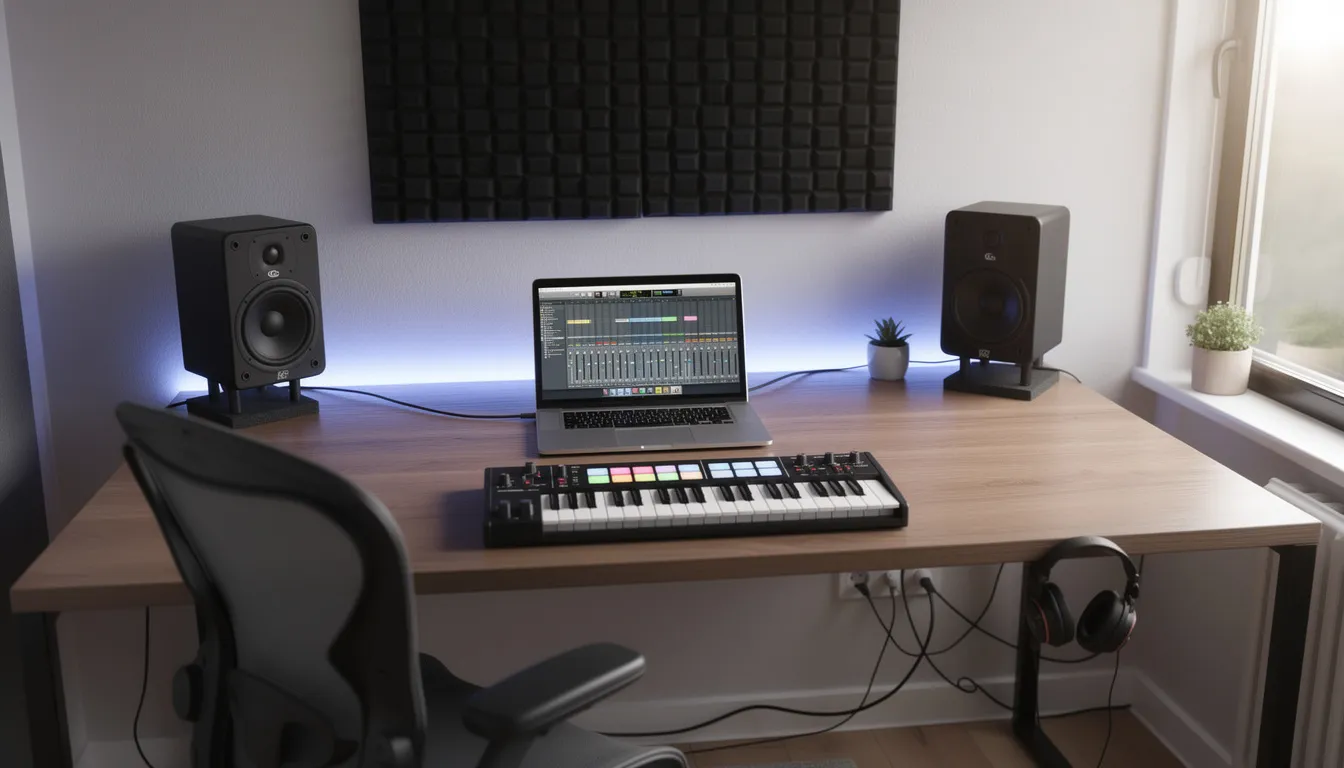
Start Experimenting
Techno’s influence on modern production existed long before it became obvious in mainstream releases. From Carl Craig’s detroit experimentalism to Berlin’s ongoing club culture, the genre continues shaping how we think about rhythm, texture, and arrangement.
For independent artists in 2026 and beyond, this isn’t just history—it’s a toolkit.
Browse Beats To Rap On for darker, electronic-driven instrumentals. Use the AI tools to analyze and master your tracks. Connect with producers who bridge urban and electronic styles.
The technology that made techno possible—affordable synthesizers, drum machines, and eventually software—now fits on your laptop. The same spirit of innovation that inspired Juan Atkins, Derrick May, and Kevin Saunderson to create something new in Detroit can drive your own music forward.
Whether you’re producing trap beats with industrial textures, recording drill vocals over four-on-the-floor kicks, or releasing experimental Afrobeats with techno-influenced arrangements, the genre’s DNA offers something useful. The night doesn’t have to belong to only one scene. Partying works across genres, and so does production knowledge.
Key Takeaways
- Techno emerged from Detroit in the mid-1980s, influenced by Kraftwerk, Giorgio Moroder, and Chicago house
- The Belleville Three (Juan Atkins, Derrick May, Kevin Saunderson) established the detroit techno blueprint
- European rave culture exploded the genre across Germany, the UK, and beyond by the early 1990s
- Core techno production relies on 4/4 kicks, 125–140 BPM tempos, and evolving textures over repetitive patterns
- Beats To Rap On’s tools—stem splitting, AI mastering, BPM detection—help artists integrate techno influences into hip-hop, trap, drill, and Afrobeats
The form keeps evolving. What started in Detroit basements and Berlin vaults now influences producers worldwide, from electronica to jungle to modern EDM. Your next album might carry that influence forward.